 Call | (575) 522-8378
 Text | (575) 619-7050
Period Or Pregnancy? How To Tell The Difference
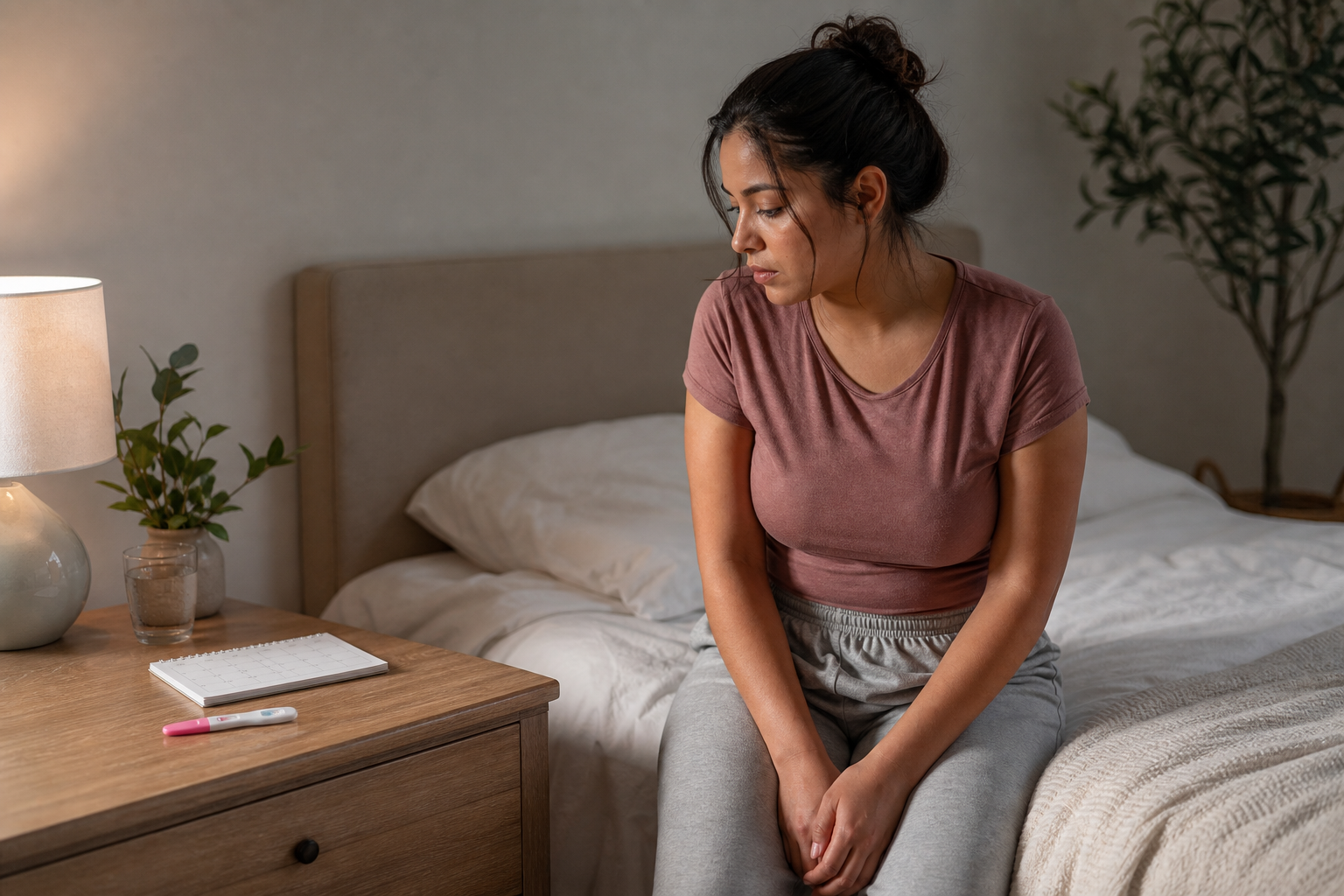
Period symptoms or early pregnancy? Sometimes they can feel almost exactly the same.
Maybe you're more tired than usual.
Your lower abdomen feels crampy.
Your breasts are sore.
Or you're convinced your period is about to start... except it hasn't.
If you're wondering whether you could be pregnant, symptoms alone usually can't give you a definite answer.
Here's what can help you tell the difference and know when it's time to take a pregnancy test.
Want an answer without waiting and wondering? High Desert Women's Center offers free pregnancy testing in Las Cruces. Or text our nurse 24/7 at (575) 619-7050 with your questions.
PMS vs. Pregnancy Symptoms
PMS and early pregnancy can cause many of the same symptoms.
Both can include:
- Breast tenderness
- Cramping
- Bloating
- Fatigue
- Mood changes
- Food cravings or appetite changes
- Headaches
That's because both your menstrual cycle and early pregnancy involve hormonal changes that can affect how you feel.
The problem? There isn't one symptom that can reliably tell you whether your period is coming or you're pregnant.
Could I Be Pregnant?
If you've had sex that could result in pregnancy, the possibility is there, even if your symptoms feel exactly like your normal PMS symptoms.
Some early pregnancy symptoms can include:
- A missed period
- Breast tenderness
- Fatigue
- Nausea
- Increased urination
- Mild cramping
But symptoms vary widely. Some people notice several early symptoms, while others don't feel much different at all.
The best way to know is to take a pregnancy test.
When Should I Test?
For the most reliable result, pregnancy tests are generally most accurate after your missed period.
Pregnancy tests detect a hormone called human chorionic gonadotropin (hCG), which your body produces during pregnancy.
Testing too early can sometimes result in a negative test even if you're pregnant because there may not yet be enough hCG for the test to detect.
If you receive a negative result but your period still doesn't start, consider testing again after a few days or talking with a healthcare professional.
What If My Period Is Irregular?
If your cycle isn't predictable, figuring out when you're officially “late” can be difficult.
Instead of relying only on your expected period date, think about when you last had sex that could have resulted in pregnancy.
If you're unsure when to test, you don't have to figure out the timing by yourself.
What If I’m Spotting?
Light bleeding or spotting can make things even more confusing.
Bleeding doesn't automatically mean you're having your normal period, and spotting can happen for several different reasons.
If the bleeding is lighter, shorter, or noticeably different from your normal period and pregnancy is possible, consider taking a pregnancy test.
If you're experiencing severe pain, heavy bleeding, dizziness, fainting, or other concerning symptoms, seek medical care.
What If My Test Is Positive?
A positive pregnancy test gives you one important answer, but you may still have questions.
You may want to know:
- How far along am I?
- What happens next?
- Do I need an ultrasound?
- What options apply to my situation?
At High Desert Women's Center, your free pregnancy test includes a review of your results and next steps. Depending on your results and eligibility, you may also have the option of a limited first-trimester ultrasound the same day or at a follow-up appointment.
Get A Clear Answer
You can compare symptoms online all day, but the only way to move beyond “maybe” is to find out what's actually happening in your body.
There's no cost, pressure, or judgment during your appointment. You don't need to have everything figured out before you come.
Make a Free Appointment or text a nurse 24/7 at (575) 619-7050.
Sources
- U.S. Food & Drug Administration. Home Use Pregnancy Tests.
- Mayo Clinic. Home pregnancy tests: Can you trust the results?
- American College of Obstetricians and Gynecologists. Signs of Pregnancy.